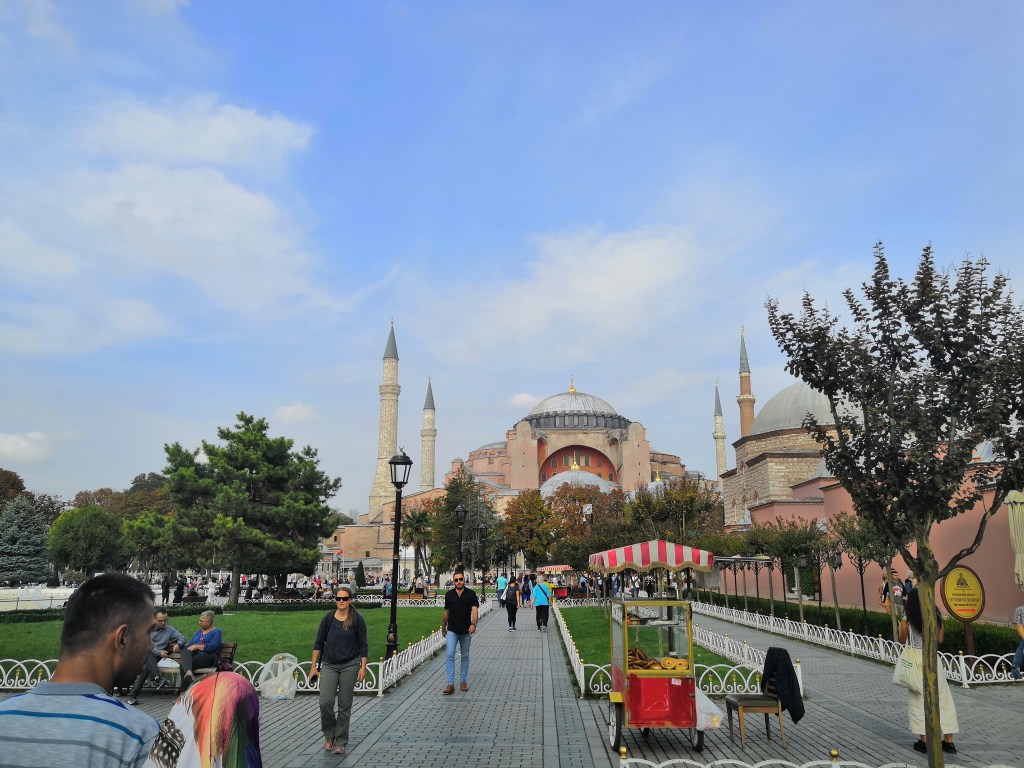
If you live in Greece or Turkey, then this piece of news is sure to not have escaped your radar. If you are from another place of the world however and not particularly interested in things like that, then you might not have heard the recent news that the Hagia Sophia museum in Istanbul, who was Constantinople is set to be turned into a mosque. After the decision was green-lighted by Turkey, overturning a 1934 law (that was found to be unconstitutional suddenly), I went on to watch some YouTube videos on the subject. I stabled upon this one by Al Jazeera English titled “Hagia Sophia: A matter of sovereignty or political narrow-mindedness?” and although I almost never right or much talk about politics because I find it repetitive, boring and just sugar-coated non-sense, the amount of non-arguments that sounded clever but the speakers in this interview, prompted me to right this article, taking their arguments one by one and dissecting them in this blog of mine, which is becoming more and more an amalgamation of randomness.
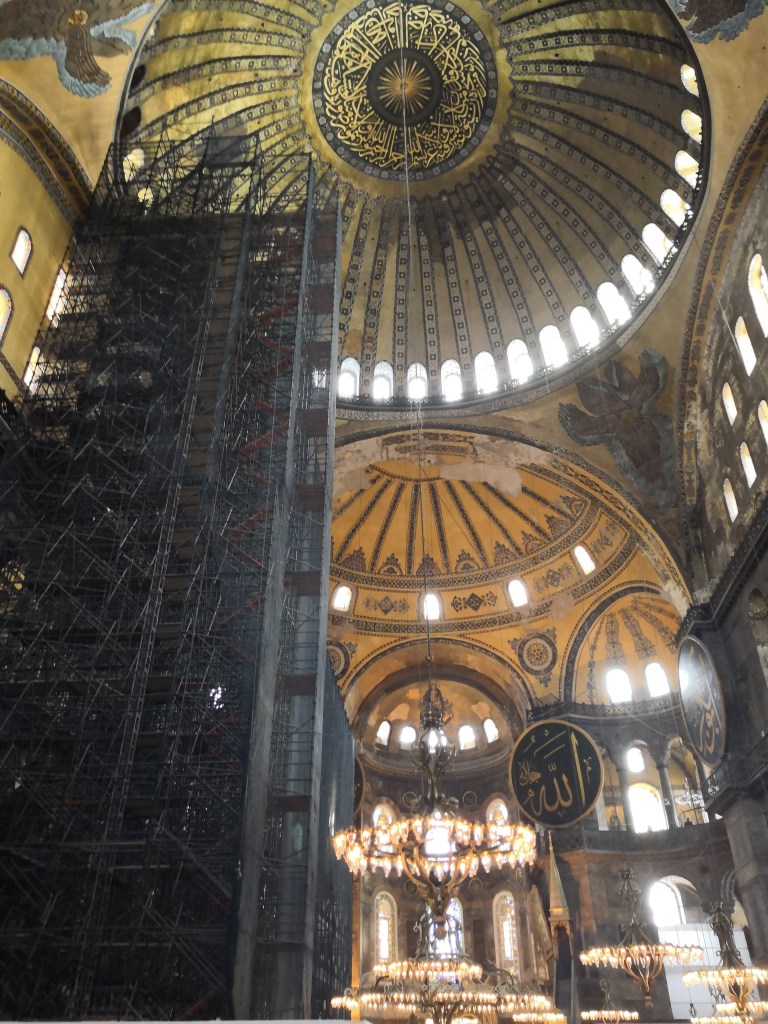
By first a bit of history. Some may wonder what the problem of a museum in the sovereignty of Turkey is, a predominantly muslim country, returning to a mosque is. Well, the problem is, it wasn’t always a mosque. It was built in 537 AD as a church and not just a church. It was the Cathedral and the most important church and seat of the Patriarch of Christianity (and after the split of Orthodox Christianity) during the reign of the Byzantine (or as it was known to them Roman) Empire. It still is the most important and significant church for Orthodox Christians to this day, with plenty of religious and historical significance. However, after the fall of the Constantinople in 1453 it was converted into a mosque, turning into a museum as mentioned in 1934. So, after this very brief historical trip let’s get into the dissection. Of course, you are advised to watch the interview yourself first to make sure that the arguments are not misrepresented. I will try to answer to all their arguments, but some will be condensed so that this article will not be 10.000 words.
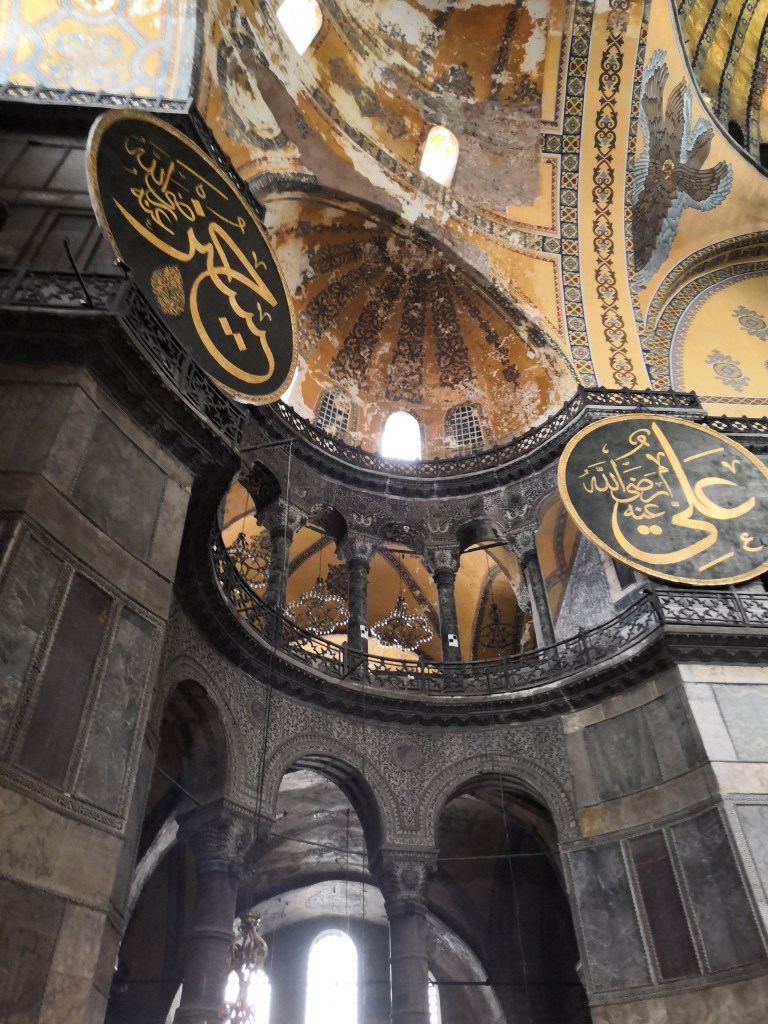
The first speaker is Ibrahim Kalin, a spokesperson of the turkish President Erdogan. His initial argument is that Hagia Sophia was a Mosque for 500 years. That’s it, that’s the whole argument. He sprinkles it with some more words, by the basis is that. The problem with this argument is that it is not an argument, it is a fact. And you know what another fact is? That it was a church for 900 years, so it has been a church longer, so why don’t they turn it to a church then based on that logic? There are churches in Turkey. Of course, it is an important landmark and they wouldn’t do something like that as the majority of the Turkish population is muslim. But he didn’t argue that, he argued that it should be a mosque because it was a mosque for many years. I hope I don’t really need to even say that, because something was, it doesn’t mean it should be. Women couldn’t vote for many years, but no one in their right mind can argue that we shouldn’t revoke their vote know because it was like that in the past. Before you accuse me however of strawmaning the argument, let me say that for this case the use of landmarks should reflect the state of the country now, not how it used to be. The museum of Hagia Sophia was representing a secular Turkey, with respect to religion and culture of others. What does a mosque will?
So, second argument has to do with whether this is just a façade to boost the ego of Turkey and give them somethings else to occupy themselves with while the Turkish economy is crumbling and is during a pandemic that hit them particularly hard. His answer to that is, there are no economic problems and we handled the pandemic perfectly. Oh, and I quick mention to his ad hominem in the beginning, when he insults the interviewed by telling him “I don’t know where you get your facts from” with clear implications about his journalistic integrity. Honestly, I could make that up even if I tried. His answer to facts is to just deny them, with no arguments, no sincerity, just a “wtf are you talking about, we are doing great”. Well, no, Turkey is not doing great. Their economy is grumbling more and more and because I am not an expert in economics, here are some articles from experts who talk about it:
- https://www.worldbank.org/en/country/turkey/overview
- https://www.ft.com/stream/a54c4ec1-7d7f-4701-ad69-c3363e918c17
- https://tradingeconomics.com/turkey/indicators
- https://www.bloomberg.com/news/articles/2020-07-19/no-room-left-for-turkish-rate-cuts-to-former-central-banker-kara
As for COVID-19 did they handle it great? Well, no obviously. Turkey is on the 15th place of countries affected by the pandemic, with 221,500 cases as of 22/07 and 2,625 per 1M of population, which is less than Italy but more than Pakistan or India that are higher in numbers. Turkish citizens are still not allowed to visit EU countries for traveling and the land borders with Greece are only open for essential trips. In all fairness they are not in the worst position, but to claim that the handled I perfectly is a stretch at least. The reason why I mentioned Italy specifically, is because this speaker’s favourite logical fallacy is Tu quoque or appeal to hypocrisy, which is basically pointing your finger to the other speaker and saying, yeah but look at what you did. This speaker instead of actually presenting an argument just says that, we did good, we did better than European countries or the US or some countries in Latin America, like Spain or Italy, without mentioning European countries that did much better like Greece, or even Germany and Poland. This argument is pretty easy to bounce, with a simple idea, just because you did better, it doesn’t mean you did well, and it doesn’t prove anything about the way you handled things.
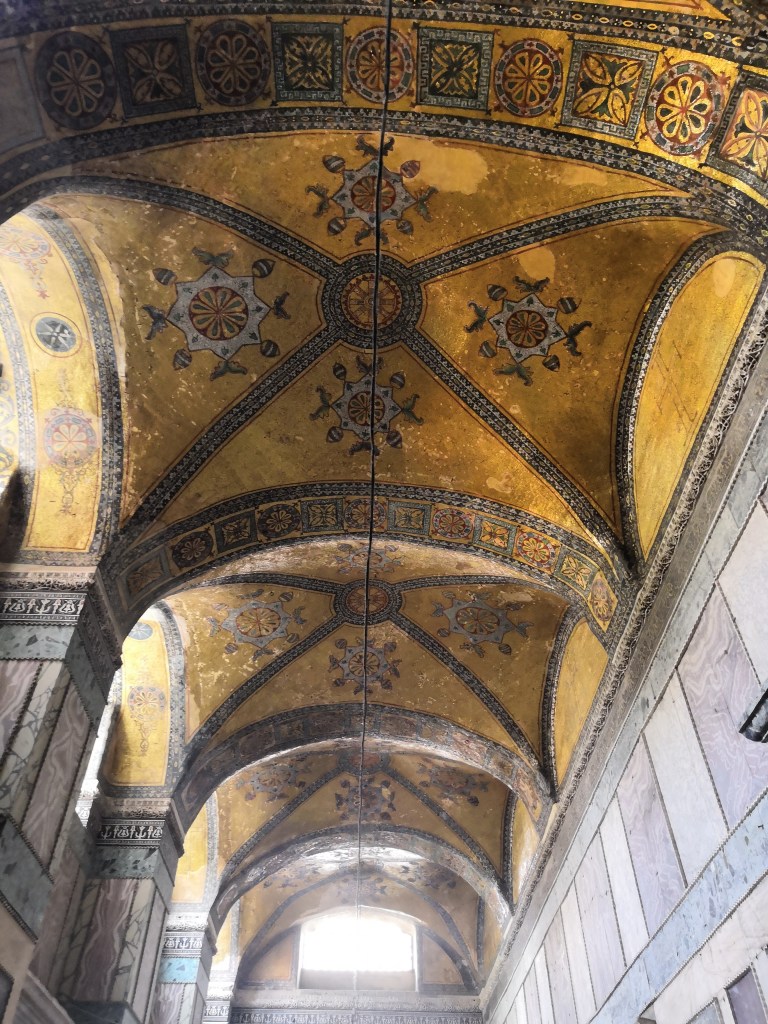
Then he mentions the political and public support that this move is having and that very few people are against it. Turkey under the latest leadership of Erdogan has seen many human rights violations and many journalists that are not allowed to freely express their opinions without consequences, as you can read in this article, among many others https://www.dw.com/en/freedom-of-speech-stands-trial-in-turkey/a-52420654 . So at least to me, this overwhelming support seems more like a muzzle, rather than genuine support. But that cannot be proven and, in any case,, yes the building is under turkish sovereignty but it is a monument considered a world heritage with ties to other religions and cultures, so should political support from the inside be the only things that matters?
He later mentions that the arguments made by the ones opposing this move are two. The first is that they are afraid that after that not everyone will be able to visit the building as a mosque, which he argues is not true. However, I have my reservation for that. Of course, we will know for sure as soon as it opens, but right across the street we have the Blue Mosque and indeed everyone is allowed to visit, but women have to wear hijabs. If I woman chooses to do that could for her, but why should I be forced to in order to see a very important building that is also part of my heritage? Also, again with reservation I would assume that not everyone will be able to enter and roam freely during prayer, with some like the Friday second prayer being quite lengthy, so again not total freedom. Furthermore, more down in their conversation another speaker mentions how they are afraid that the christian symbols in the church will be hidden, which will change this world heritage and it would be disrespectful. So, will everyone be allowed to enter, and will the building be the same? It remains to be seen, but it is doubtful.
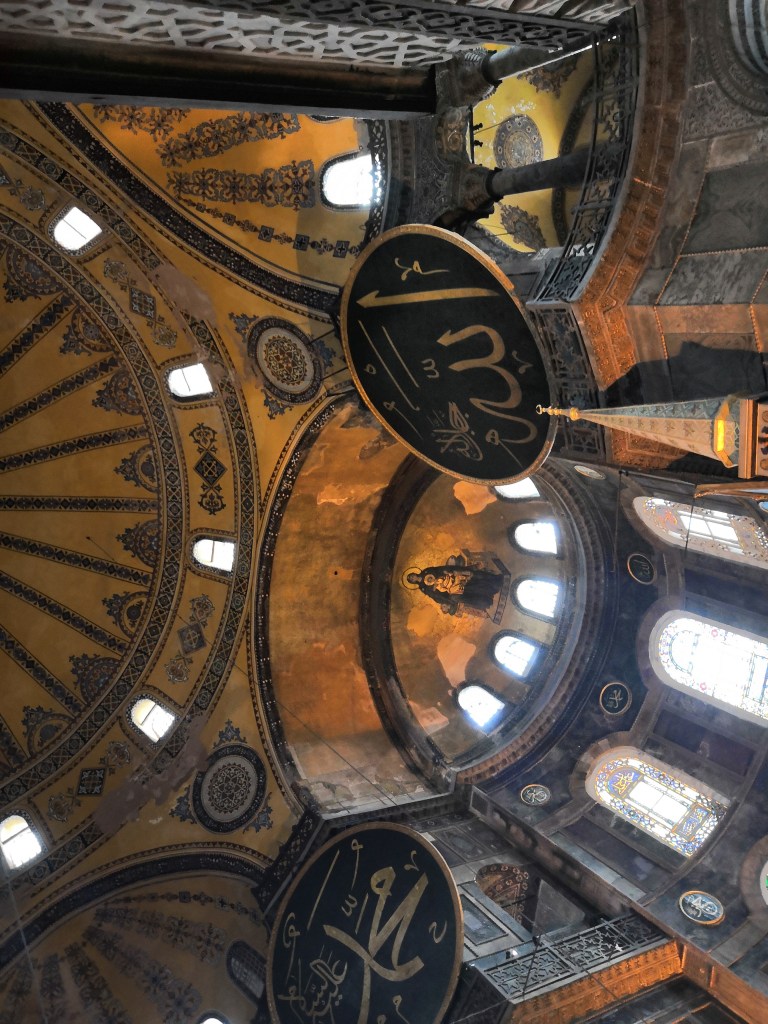
Later, he mentioned that many places serve like both historical and religious sights, like Notre Dame, which is an odd example, considering that now it doesn’t really serve as anything, after the whole fire incident. But again, his arguments are so easy to refute. Notre Dame was always a church, it was built as a church in a christian country, ruled by christians (for the most part) and it always worked as a church, so it is not the same thing. If Hagia Sophia was a mosque to begin with, nobody would care. And yes, many churches in Europe are also open as museums, but usually they sway to one or the other, or they keep a specific place inside for worship and the rest of the place is for tourists, who act like they are inside a museum not a religious place.
He goes on to question why is secular Europe (yeah Europe in particular, not other countries that have raised concern) is asking how a mosque can act as a museum too and that their attitude is questionable. Basically, dog whistling (but just whistling) islamophobia. Not to repeat myself this building has a very complex history and cultural background and by this move put very simply you are disrespecting it, opening by the way the Pandora’s box for other countries, like Israel (which generally has a degree in disrespect). That’s what some countries and not Europe in general is questioning, not whatever he chooses to say.
After that charade is over, he talks about how Turkey has a long tradition of being open to different religions. I am going say, that yes Turkey has been secular and has been accepting, but the problem is not what it was, it is what is seems like it’s becoming, moving further and further from secularism to religious fundamentalism, with many laws changing under Erdogan (https://www.bbc.com/news/world-europe-39053064). Also yeah, Turkey has been secular, but let’s not forget the population exchange in 1923, between Turkey and Greece, in which muslims were forces to leave their homes and go to a new country they didn’t know, Turkey, while christians had to do the same and go to Greece, with the main purpose of creating homogeneous countries when it came to religion. Or we can mention the 1955 Pogrom of Istanbul, where the Greek minority of Istanbul was targeted, while their Orthodox churches, cemeteries and homes were destroyed and many were forced to leave. Turkey wanted to be Turkified driven by the new nationalistic ideas burning the Balkans in the 19th and 20th centuries. All countries have passed such phase, so it is not to say that Turkey was over the top nationalistic, but it is to say that the road was not paved with roses as same may want to present.
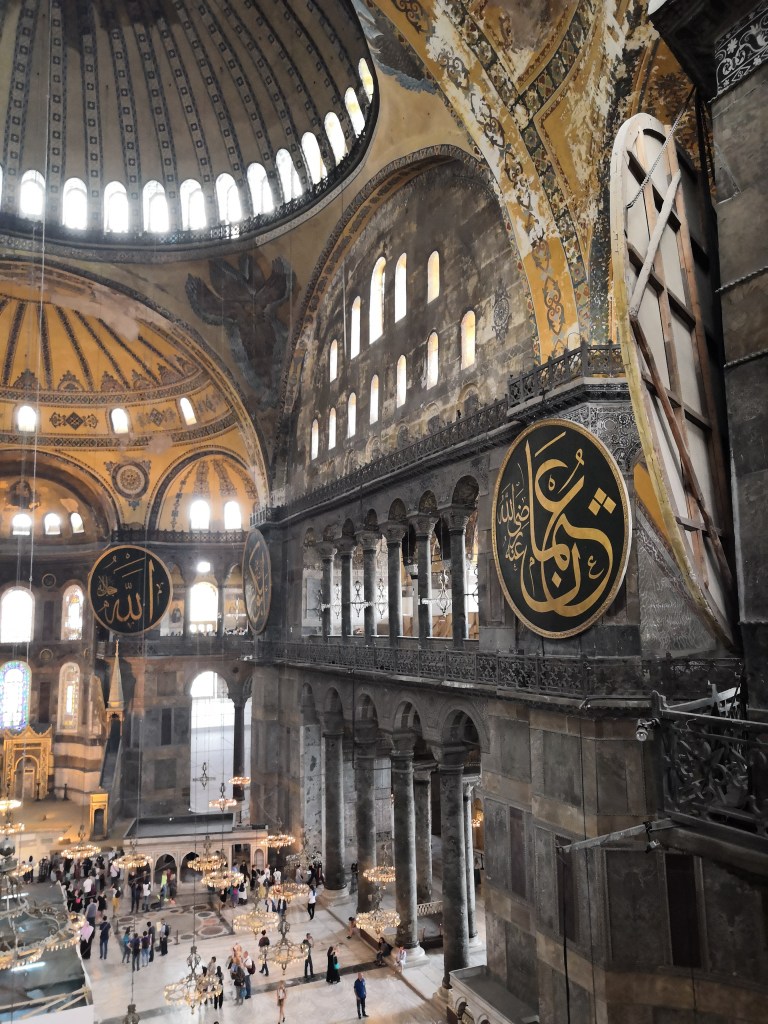
He later asks what international institutions or conventions are there to decide what they can and cannot do with Hagia Sophia. I don’t know what about UNESCO? Yeah, I know they are useless, but they exist and in any case, all countries have to abide to some international laws, whether they are obligatory or not doesn’t matter. We exist in a globalized world and countries have relations with one another. Yeah, if one wants, they can do whatever they want with their buildings and people and not abide those laws at all. That might get them to hot water, but even if they can avoid open conflict, they will start losing alliances and relationships with other countries that are disrespected. Turkey strategical position, which resulted in countries looking the other way for many issues in the past like the Armenian Genocide for example. But for how long they can do whatever they want without becoming more and more isolated? North Korea does whatever it wants, but it is not exactly the number one tourist destination. Oh, he also makes a Tu quoque again (I told you it is his favourite), mentioning the rise of islamophobia in Europe (yes again just Europe). Is Islamophobia an issue? Yes. Is it any relevant? No. Again just because someone else is doing something bad, doesn’t make your position any better or gives you the right to act in such a way.
We later learn that the major of Istanbul himself is against this decision. Gee and I thought everyone were for it. Yet again, instead of answering he just says, his political party agrees so it is their problem. No argument, no answer as to why such a relevant person would be against such a decision. After that again a speech about how great their economy and handling of the pandemic is, already talked about that and then again about religious minorities.
After this comedy routine, we have another two guests. One is Mustafa Akyol from Washington D.C., I mostly agree with his points, so I am not going to bring up his arguments as there is no point to just mentioned it and just say I agree with it, at least in my mind. If that is hypocritical then so be it. The other gentleman is Mehmet Celik, who is a managing editor in the Daily Sabah, a newspaper in Istanbul.
He starts of with our old Tu quoque. So, his arguments is that in the Balkans and in Spain mosques have been destroyed in the past or converted. They have and that is despicable and disrespectful behavior that should be condemned, but it is also irrelevant. The facet that someone has done something bad, does not give you’re the right to do the same bad thing bad and if you do it makes you the same as them. There is no logic in acting in a way that you, yourself disagree with, when you see it done by others. He also later mentions that Athens does not have any mosque, when asked if Greek displeasure was what this move was trying to provoke, Again, despicable and disrespectful and many want that to change, but also irrelevant and not answering the question.
Later, he argues that this should be only a matter of domestic issue. As mentioned, any country can do whatever they want with their private land, at least to an extent, but they cannot expect international support. If a country acts rogue and disrespects the culture and religion of other countries, then it will slowly face the consequences and even be isolated by the international community. Turkey does not exist in a void, so any decision taken, no matter how much it looks like it is theirs’ to take, will be looked into by others.
In the end after this long-long analysis, that probably no one would read, I have to say, however, believable it may seem, I really don’t care that much about this decision. Yes, it is wrong, and it is disrespectful, but in my opinion, it is made to provoke Greek’s and Christians. It is a power move to show that look what we can do. But after watching that interview, I could resist to reply to the nothing arguments they were making. I don’t know, it was just fun.
 The Indonesian Chronicles